
Parents often ask about the best age for braces and whether their child is ready for orthodontic treatment. While there is no universal age that applies to every child, the right timing depends on factors such as jaw growth, tooth development, bite alignment, and crowding. Some children may benefit from an early orthodontic evaluation, while others may not need braces until their teenage years.
At Great Grins, we monitor children’s developing smiles during routine dental visits and can discuss concerns about tooth alignment and jaw development with families. When orthodontic care may be beneficial, we can help families understand their options and refer them to an orthodontic specialist for treatment planning.
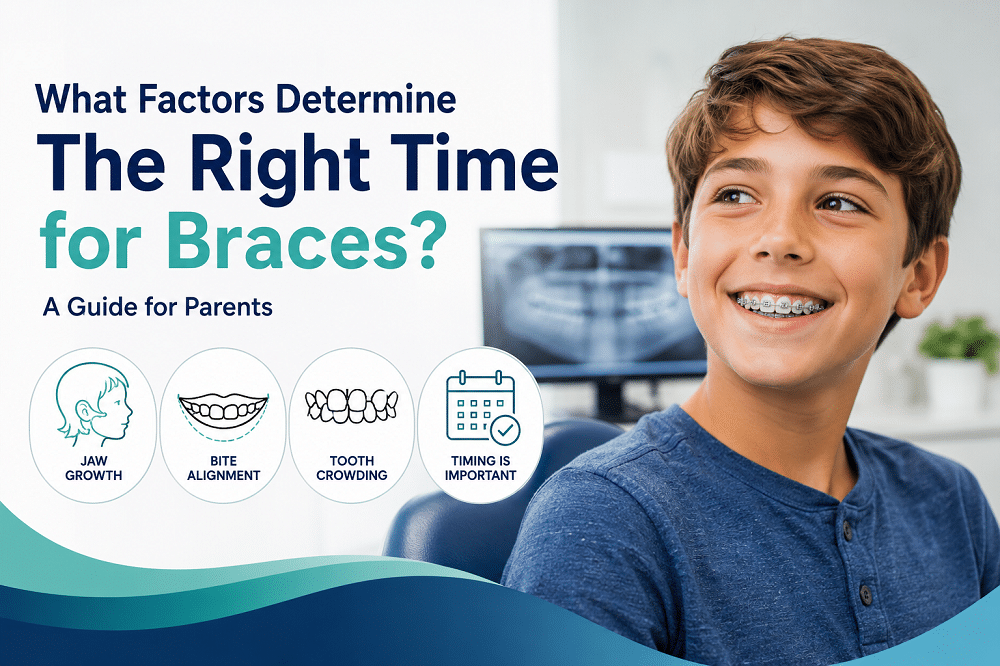
How Jaw Growth Affects Orthodontic Timing
A child’s jaw continues to grow and change throughout childhood. The timing and pattern of this growth can influence how permanent teeth fit together and whether there is enough space for them to erupt properly.
When the upper and lower jaws do not develop in proper proportion, children may develop bite problems such as overbites, underbites, crossbites, or open bites. Identifying these concerns while a child is still growing can give an orthodontic specialist an opportunity to evaluate whether early intervention could help guide development.
Not every growth concern requires immediate treatment. However, monitoring jaw development allows dental and orthodontic professionals to identify changes and determine the most appropriate timing for intervention.
Why Early Orthodontic Evaluations Matter
The American Association of Orthodontists recommends that children have their first orthodontic checkup no later than age 7. An evaluation does not necessarily mean a child will need braces at that age. Instead, it gives an orthodontic specialist an opportunity to examine developing teeth and jaws and identify potential concerns.
Early evaluations can reveal crowding, abnormal eruption patterns, bite discrepancies, or jaw-development issues before they become more complicated. In some cases, an orthodontist may recommend monitoring the child rather than starting treatment immediately.
This approach allows families to understand what may be developing and when treatment could be most effective.
Tooth Crowding and Spacing Can Influence Timing
Crowding is one of the most common reasons children eventually need orthodontic treatment. It occurs when there is not enough room for permanent teeth to fit properly within the dental arch. Teeth may overlap, rotate, or erupt in unusual positions.
Spacing can also be a concern. Gaps between teeth may occur naturally as children’s jaws grow, but persistent or excessive spacing can sometimes indicate an underlying developmental or bite issue.
The timing of tooth eruption matters as well. If permanent teeth do not emerge in the expected sequence or become blocked by neighboring teeth, an orthodontic evaluation may help determine what is happening and whether intervention is necessary.
Signs Your Child May Need an Orthodontic Evaluation
Parents may notice several signs that warrant discussion with their child’s dentist or an orthodontic specialist. Difficulty chewing or biting food can sometimes indicate a bite problem. Other signs may include teeth that appear crowded, significant gaps, teeth that protrude noticeably, or difficulty closing the mouth comfortably.
Children who frequently bite their cheeks or the roof of the mouth, breathe through their mouth, or have noticeable jaw shifting when they bite may also benefit from an evaluation.
At Great Grins, routine dental examinations give our team an opportunity to monitor these developmental changes and discuss any concerns with parents.
Early Interceptive Treatment vs. Teenage Braces
Orthodontic care can take different forms depending on a child’s stage of development. Early interceptive treatment may be considered when a developing problem could benefit from intervention while the child is still growing. Depending on the situation, this could involve monitoring, space management, or other specialized orthodontic approaches.
Traditional braces are more commonly associated with the teenage years, when most permanent teeth have erupted. At this stage, orthodontic treatment can focus on correcting tooth alignment and bite relationships.
Early treatment is not automatically better for every child. Some children benefit from waiting until more permanent teeth have erupted, while others may require earlier intervention. An orthodontic specialist can determine the appropriate approach after evaluating the child’s individual development.
The Importance of Ongoing Dental Monitoring
Determining the right time for orthodontic treatment is not based solely on a child’s age. Regular dental visits help track tooth eruption, jaw development, spacing, and overall oral health over time.
A dentist can identify changes that may warrant an orthodontic referral and help families understand what to expect as their child’s permanent teeth develop. This ongoing monitoring can make it easier to identify concerns at an appropriate stage rather than waiting until a problem becomes more difficult to address.
Families looking for a pediatric dentist in Portland can turn to Great Grins for comprehensive pediatric dental evaluations and guidance regarding their child’s developing smile.
Helping Your Child Navigate Orthodontic Care
There is no universal “right age” for braces. The ideal timing depends on the child’s jaw growth, tooth eruption, bite alignment, crowding, and overall dental development. An early evaluation can provide valuable information even when immediate orthodontic treatment is not necessary.
At Great Grins, we focus on monitoring children’s oral development and helping families understand when an orthodontic evaluation may be appropriate. When specialized orthodontic treatment is needed, we can refer families to an orthodontic specialist who can develop a treatment plan based on the child’s individual needs.
With regular dental monitoring and timely evaluations, parents can feel confident that potential orthodontic concerns are being recognized and addressed at the appropriate stage of development.