
Some children seem to develop cavities despite regular brushing, while others go years without experiencing significant tooth decay. The difference is rarely caused by one factor alone. Diet, oral hygiene, genetics, enamel strength, saliva production, and everyday habits can all influence a child’s cavity risk. Understanding these causes of tooth decay in children can help parents take practical steps to protect developing smiles.
At Great Grins, we focus on preventive pediatric dental care and help families understand the factors that can affect their child’s oral health. Identifying potential risks early makes it easier to create personalized habits and preventive strategies that can keep children’s teeth healthier.
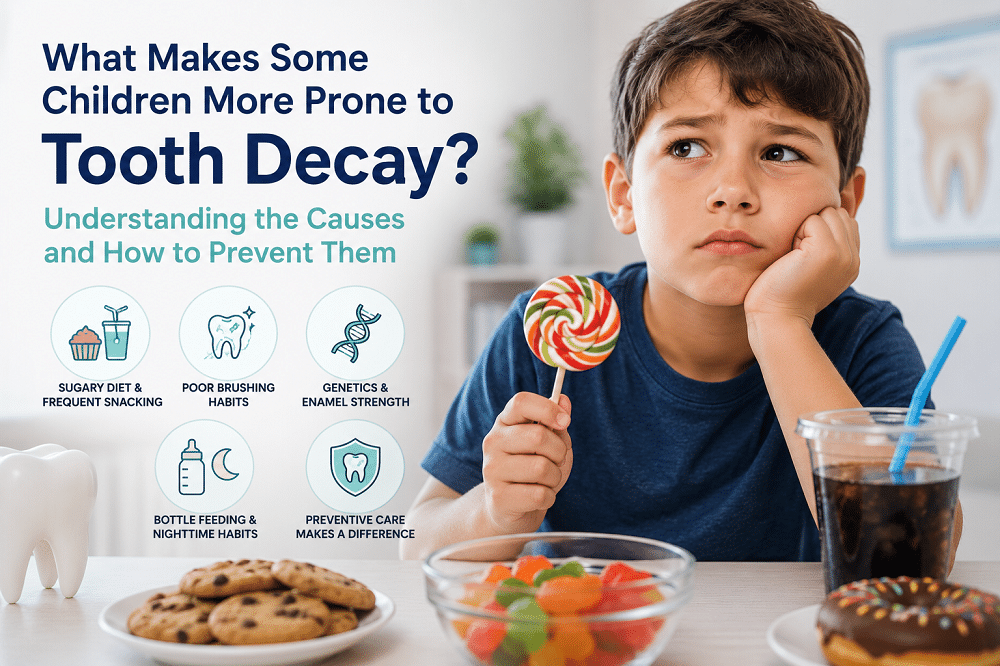
How Diet and Snacking Affect Cavity Risk
One of the biggest contributors to childhood cavities is frequent exposure to sugar and carbohydrates. When children eat sugary foods or drinks, bacteria in the mouth use those sugars to produce acids. These acids can gradually weaken tooth enamel and contribute to decay.
Candy, cookies, sweetened cereals, pastries, fruit snacks, soda, sports drinks, and juice can all contribute to cavity risk when consumed frequently. The frequency of exposure matters because teeth need time between meals and snacks to recover from acid attacks.
Constant grazing throughout the day can therefore be harder on teeth than eating treats occasionally with meals. Parents can help by offering nutritious snacks such as cheese, plain yogurt, vegetables, nuts when age appropriate, and whole fruits.
Water is also an excellent everyday beverage because it helps rinse the mouth and does not expose teeth to added sugar.
Brushing Habits Make a Major Difference
Children are still developing the coordination needed to brush effectively. A child may happily brush twice a day but still leave plaque behind, particularly around the back teeth and along the gumline.
Parents should supervise brushing and help children brush thoroughly until they have the ability to do it effectively on their own. Fluoride toothpaste can strengthen enamel and help protect against cavities when used appropriately for the child’s age.
Flossing is also important when teeth touch each other. A toothbrush cannot effectively clean the tight spaces between teeth, allowing plaque and food particles to accumulate.
At Great Grins, dental visits provide an opportunity to evaluate brushing and flossing habits and give parents practical recommendations based on their child’s individual needs.
Genetics and Enamel Strength Can Influence Cavity Risk
Not every child has exactly the same level of natural protection against tooth decay. Genetics can influence characteristics such as tooth structure, enamel development, saliva production, and susceptibility to certain oral conditions.
Enamel is the hard outer layer that protects teeth from acids and bacteria. If enamel is weaker or has developed irregularities, a child may be more susceptible to decay. This does not mean cavities are inevitable, but it can make consistent prevention especially important.
Saliva also plays a protective role. It helps wash away food particles, neutralize acids, and provide minerals that support enamel. Differences in saliva production can therefore influence how effectively a child’s mouth naturally protects teeth.
Bottle Feeding and Nighttime Habits
Feeding habits during infancy and toddlerhood can also affect cavity development. When sugary liquids remain in contact with teeth for extended periods, bacteria have more opportunities to produce enamel-damaging acids.
Putting a baby to bed with a bottle containing milk, formula, juice, or another sugary drink can increase the risk of early childhood tooth decay. The concern is especially significant when the liquid remains around the teeth throughout the night.
As children transition from bottles to cups, parents should follow age-appropriate guidance from their pediatric and dental care providers. Establishing healthy feeding and drinking routines early can help protect newly erupted teeth.
Prolonged Pacifier Use and Oral Development
Pacifier use can provide comfort for infants and young children, but prolonged use may affect oral development. Depending on the duration and frequency of use, extended pacifier habits can contribute to changes in tooth position or bite development.
Parents should discuss persistent pacifier use with their child’s dentist, particularly as the child gets older. A pediatric dental professional can provide guidance about the appropriate timing for reducing and eventually stopping the habit.
While pacifier use is not directly responsible for every cavity, addressing oral habits as part of preventive care can support healthier overall development.
Preventive Care Can Lower Cavity Risk
Children who are naturally more susceptible to cavities can benefit from additional preventive measures. Fluoride treatments are one option that can strengthen enamel and make teeth more resistant to acid attacks. A dentist can recommend professional fluoride treatments based on a child’s age and individual cavity risk.
Dental sealants can provide another layer of protection, particularly on the chewing surfaces of permanent molars. These teeth contain grooves and pits where food and plaque can become trapped, making them particularly vulnerable to decay.
Regular dental examinations are equally important. Routine visits allow dental professionals to identify early signs of decay, monitor developing teeth, assess hygiene, and recommend personalized prevention strategies.
Recognizing Your Child’s Individual Risk Factors
There is no single explanation for why some children develop more cavities than others. A child who frequently snacks on sugary foods, struggles with brushing, has weaker enamel, or has other risk factors may need a more proactive prevention plan.
This is why individualized dental care matters. Rather than focusing only on treating cavities after they appear, parents and dental professionals can work together to identify potential causes and reduce future risks.
Families searching for teeth whitening in Oregon City may also find it helpful to discuss their child’s overall dental health with a pediatric dental professional. Preventive care should remain the priority for developing smiles, while cosmetic concerns can be addressed appropriately as children grow.
Building a Strong Foundation for a Healthy Smile
Cavities are common during childhood, but many risk factors can be managed with consistent preventive care. Limiting frequent sugary snacks, encouraging healthy meals, supervising brushing and flossing, and establishing good feeding habits can all make a meaningful difference.
Professional fluoride treatments, dental sealants, and regular examinations can provide additional protection for children who are particularly prone to tooth decay.
At Great Grins, we work with families to identify individual cavity risks and develop practical strategies for maintaining healthy teeth. With consistent home care and professional guidance, parents can help give their children a strong foundation for a healthy smile throughout childhood and beyond.